Core Value: Ergonomic Innovation and Aerospace-Grade Reliability
Table of Contents
Lightweight Aluminum & Carbon Wheelchair Frames
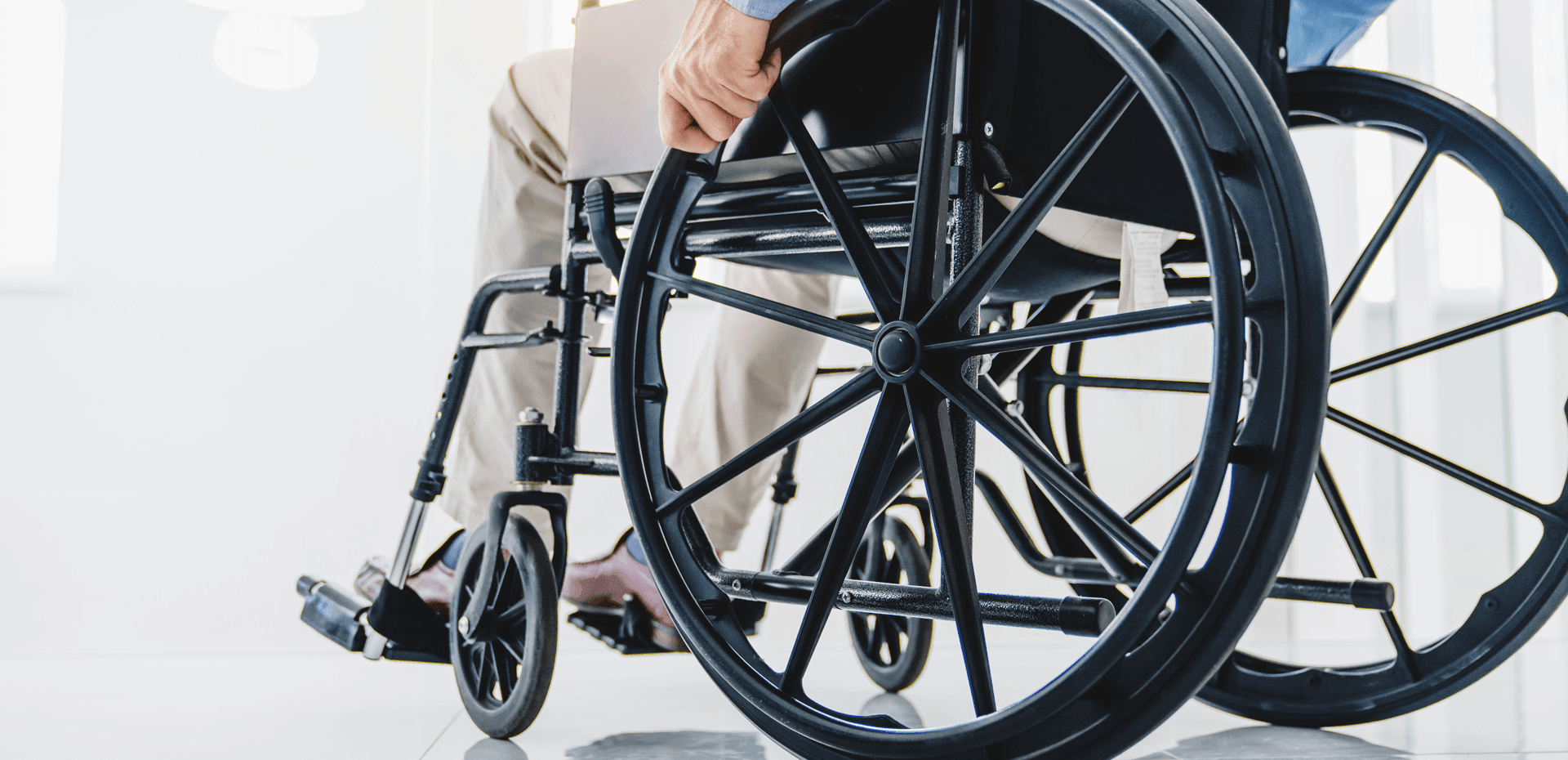
In the medical sector, every gram saved enhances user mobility. We apply our expertise in special-profile tubing to create wheelchair frames that are both ultra-light and exceptionally durable. Whether using high-strength aluminum or advanced carbon fiber, our frames are built to withstand daily rigors while providing a premium, effortless user experience.
Medical & Rehabilitation Equipment Applications
Precision tubing is used across a wide range of medical, rehabilitation, and mobility equipment where structural reliability must be combined with low weight, dimensional consistency, and ease of movement.
Beyond wheelchair structures, Yeu Chueh can support tubing applications for walkers, rehabilitation devices, adjustable hospital beds, surgical light arms, mounting frames, and other medical equipment structures. Tube dimensions, wall thickness, profiles, forming requirements, and surface specifications can be evaluated according to the functional needs of each product.
This manufacturing flexibility allows medical equipment brands and OEM/ODM customers to develop structures that balance strength, portability, usability, and production feasibility.
Lightweight Structures for Mobility and Daily Use
For wheelchairs, walkers, and other assistive devices, reducing structural weight can make equipment easier to propel, lift, transport, fold, or reposition during everyday use. However, lightweight design cannot come at the expense of the strength and durability required for repeated operation.
Through material selection, customized wall thickness, special-profile tubing, and forming-process evaluation, Yeu Chueh can support tube structures designed to place material more efficiently according to functional and load requirements.
The objective is not simply to make a component lighter, but to achieve an appropriate balance between structural performance, ergonomic use, portability, and long-term reliability.
Precision, Surface Quality & Long-Term Durability
Medical equipment structures often contain moving, adjustable, or assembled components, making dimensional accuracy especially important. Tube diameter, straightness, bend geometry, mounting locations, and joining interfaces can directly affect assembly consistency and the operation of the finished equipment.
Surface quality is another important consideration. Components used in medical and rehabilitation environments often require smooth, consistent finishes that support both product appearance and practical daily use. Material selection, forming conditions, surface requirements, and inspection criteria should therefore be considered together during development.
By controlling these factors throughout the manufacturing process, tubing can be developed to support the dimensional consistency, durability, and visual quality expected in high-value medical and assistive equipment.
From Ergonomic Evaluation to OEM/ODM Production
Successful medical equipment development requires more than manufacturing tubing according to a drawing. Structural requirements, user interaction, equipment weight, adjustment mechanisms, assembly interfaces, dimensional tolerances, surface requirements, and manufacturing feasibility all need to be considered before stable production begins.
Yeu Chueh can support customers during early-stage development through material and tubing evaluation, prototype development, dimensional verification, process adjustment, and subsequent production. Digital development tools such as 3D scanning, reverse engineering, finite element analysis (FEA), and 3D printing can also support design review, structural evaluation, and rapid prototyping where appropriate.
By identifying potential manufacturing constraints earlier in the development process, medical equipment brands and OEM/ODM customers can reduce unnecessary design revisions and improve the transition from prototype development to consistent volume production.
